Tag: Items

  • Multi value arrays in PowerShell: How to create them really easy

    Hello together, in my latest activity as an consutlant I encountered following issue: I got a objects with two meta data. In my example it was a milestone with an link to the milestone activity. Since it were more than 30 items, I didn’t want to work with PSObjects. I was searching for a solution to create multi value arrays in PowerShell with little code as possible. If I would work with PSObjects, it would blow up my code. In this article, I will show you how you can create “normal” arrays and also how you can enhance this arrays, to multi value arrays in PowerShell.

    Create Standard PowerShell Arrays in PowerShell

    A standard array is set up like this:

    $array = @("Value1","Value2")

    You can also write it like this:

    $Array = @( 
        "Value1"
        "Value2"
    )

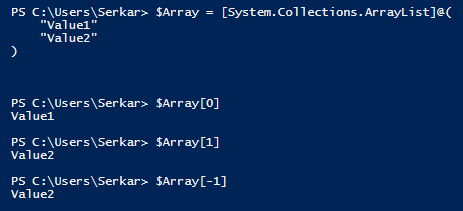
    So you can get the single values, by putting in the index number of it in square brackets – like $Array[0] for the first value and $Array[1] for the second value. With [-1] you can get the last value of the array.

    PowerShell standard arrays

    Add Value to Standard PowerShell Arrays

    You can add new lines in the array like this:

    $Array.Add("Value3")

    Remove Value from Standard PowerShell Arrays

    You can remove the lines of an array like this:

    $Array.Remove("Value2")
    Removed array

    Create multi value arrays in PowerShell

    DisplaynameLink
    Microsofthttps://microsoft.com
    SPOScriptshttps://workplace-automation.com/
    Azure Portalhttps://portal.azure.com
    ZMYLERhttps://zmyler.com

    For creating a multi value arrays in PowerShell, we have to inject a hashtable to each array line.

    A hashtable looks like this:

    @{KEY="VALUE"; KEY2 = "VALUE2"; KEYn = "VALUEn"}

    So your multi value arrays will look like this:

    $Array = @( 
        @{ Key1=("Value1"); Key2=("Value2")}
        @{ Key1=("Value3") ;Key2=("Value4")}
    )

    For my example it looks like this:

    $Array = @( 
        @{ Displayname=("Microsoft"); Link=("https://microsoft.com")}
        @{ Displayname=("Google"); Link=("https://google.com")}
        @{ Displayname=("Azure Portal"); Link=("https://portal.azure.com")}
        @{ Displayname=("ZMYLER"); Link=("https://zmyler.com")}
    )

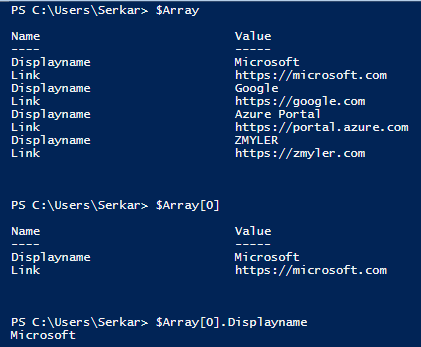
    As you can see, you can also get the single values of each line in array:

    Single value of array

    Add Value to mutli value Arrays in PowerShell

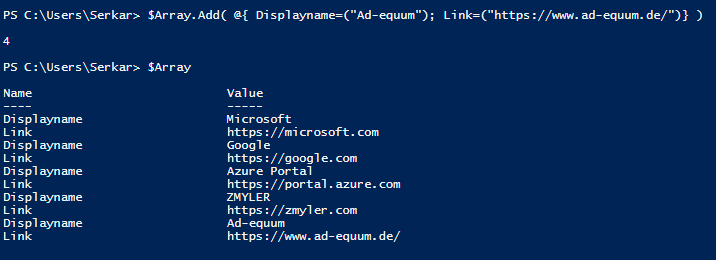
    You can add a value to a multi value array in PowerShell like this:

    $Array.Add( @{ Displayname=("Ad-equum"); Link=("https://www.ad-equum.de/")} )
    Add value to mutli value arrays in PowerShell

    Remove Value from multi value arrays in PowerShell

    Removing a value from a multi value arrays in PowerShell is more complicated. You have to redefine the array, by filtering out the value, which you don’t want in your array:

    $Array = $Array | Where-Object {$_.displayname -ne "Ad-equum"}

    Conclusio

    If you want to create a multi value arrays in PowerShell, the only thing you have to do is to inject a hashtable to each line. I hope, that I have saved you a ton of work 🙂

    Further Reading

    Here is the official reference of Microsoft to arrays: Everything you wanted to know about arrays – PowerShell | Microsoft Docs

    If you are interested in hasthables, check Microsofts docs: Everything you wanted to know about hashtables – PowerShell | Microsoft Docs

  • Filtering for SharePoint items with CAML Queries

    Filtering for SharePoint items with CAML Queries

    Most of our times, we just need just a bunch of items, to export them or to change their values. This post should help you to show, how to handle filtering for SharePoint items. Besides filtering for SharePoint items with Where-Object, you can also make use of CAML (Collaborative Application Markup Language), which lets you get only the items, you need. It might increase the performance of your queries, when you are dealing with large amounts of data.

    Where are the items, which I am looking for?

    Preqrequistes

    If we want to achieve filtering for SharePoint items, with a CAML query, we have to fulfill following prerequisites:

    1. Permissions to access the list
    2. Installed Module PNP.Powershell. If you don’t know how to, check the post.
    3. Connection to the site via PNP.PowerShell. If you don’t know how to, check the post.

    Considerations

    1. You should take care of the case sensitivity of operands and column names
    2. You should take care of the <view> part. Sometimes it is needed, sometimes not – so I would rely on the examples.

    Query Schema

    A query is structured like this

     "<View><Query><Where><LOGICAL OPERATOR><FieldRef Name='INTERNAL NAME OF COLUMN'/><Value Type='VALUE TYPE'>VALUE</Value></LOGICAL OPERATOR></Where></Query></View>"

    You can find the internal name of columns in two ways:

    PowerShell or GUI.

    Explanation for PowerShell: Getting FieldValues of Items | SPO Scripts
    Explanation for GUI: Determine internal name of SharePoint Columns with GUI (workplace-automation.com/)

    Value types

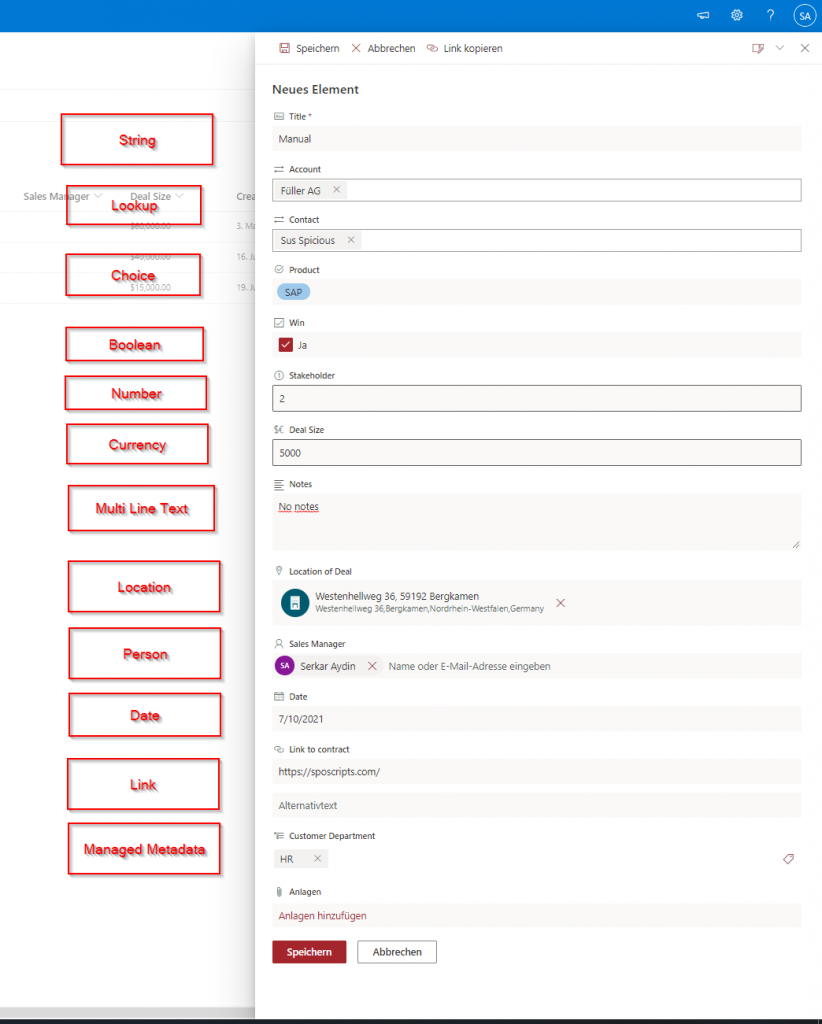
    TypeMeaningExamples
    BooleanIt means true or false. You can find this in yes/no checkboxestrue, false
    true reflects 1
    false reflects 0
    ChoiceIt reflects the choices in your sharepoint listapple, banana
    CurrencyIt reflects the amount of an defined currency5$
    DateTimeIt reflects a timestamp23.06.2021 15:30
    GUIDGlobally Unique Identifier (GUID)6154ff96-8209-457b-86dd-ee7dcd80b584
    IntegerIt reflects a number as an integer 10
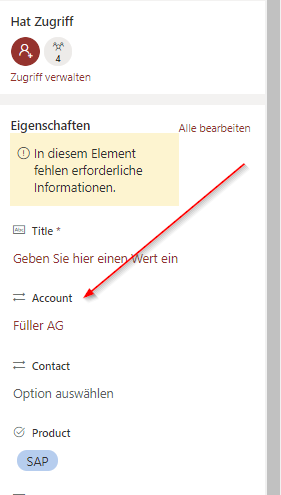
    LookupLinks to another list: for example an Orders list may have a lookup field that links to customers in a Customer list;Füller AG
    NoteReflects a multi line text field. Not sortable or groupableLorem ipsum dolor sit amet, consectetuer adipiscing elit. Donec odio.

    Quisque volutpat mattis eros. Nullam malesuada erat ut turpis. Suspendisse urna nibh, viverra non, semper suscipit, posuere a, pede.
    TextReflects a single line text field. Sortable and groupable. Corresponds to the nvarchar SQL data type and represented by the SPFieldText class.Lorem ipsum dolor sit amet, consectetuer adipiscing elit.
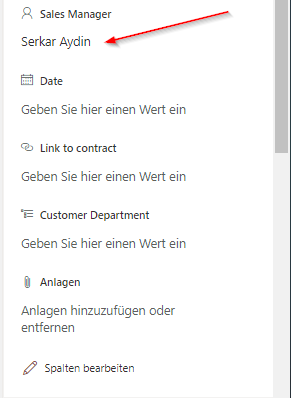
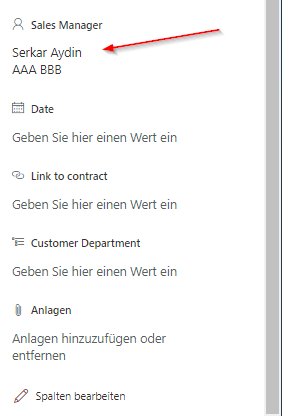
    UserA Lookup field that references the UserInfo database table.Email TypeId LookupId LookupValue
    —– —— ——– ———–
    Serkar@devmodernworkplace.onmicrosoft.com {c956ab54-16bd-4c18-89d2-996f57282a6f} 11 Serkar Aydin
    Source: Field element (Field) | Microsoft Docs

    Logical Comparison Operators

    In this case X means your entry

    OperatorMeaning
    BeginsWithThe existing value begins with X
    ContainsThe existing value contains x
    DateRangesOverlapThe existing date overlaps the date range defined in x
    |---- 01.01.-07.01 ------|
    |---02.01-09.01 -----|
    EqThe existing value equals x
    GeqThe existing value is greater or equal x
    GtThe existing value is greater than x
    InX is one of the existing values
    Includeschecks, whether x is in the defined values
    NotIncluseschecks, whether x is not in the defined values
    IsNotNullChecks wheter the existing value is not null
    IsNullChecks wheter the existing value is null
    LeqThe existing value is lower equal x
    LtThe existing value is lower than x
    Source: Query schema in CAML | Microsoft Docs

    In order to filter by query paramter, you have to define a filter query, depending on your datatype (string, integer, boolean..) you have to choose a different query value type.

    Logical Joins

    OperatorMeaning
    AndBoth query operations have to be fulfilled
    OrOnly one query operation have to be fulfilled
    Source: Query schema in CAML | Microsoft Docs

    Query Examples

    My blog would not keep it’s promise, If you would not find examples, which give you a fast way to adapt the scripts, so here we go!

    In my example, I am using my demo opportunities list. I have marked the names of the columns, the value types, the operands and the actual values bold. Mostly I am using the logical operator “eq”, but I think if you got the basic concept of this, you can adapt it to your solution easily and if not, we will find a way together.

    Example for boolean

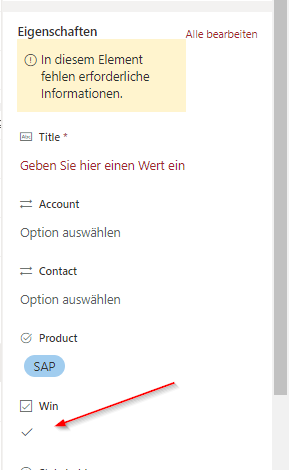
    If you want to find items with TRUE values, you have to enter 1. For FALSE values, you have to make use of 0.

    If boolean should be true:

    Get-PnPListItem -List "Opportunities" -Query "<View><Query><Where><Eq><FieldRef Name='Win'/><Value Type='Boolean'>1</Value></Eq></Where></Query></View>"

    If boolean should be false:

    Get-PnPListItem -List "Opportunities" -Query "<View><Query><Where><Eq><FieldRef Name='Win'/><Value Type='Boolean'>0</Value></Eq></Where></Query></View>" 

    Example for choice

    If you want to filter for values choice values, you have to make use of a query like this:

    Get-PnPListItem -List "Opportunities" -Query "<View><Query><Where><Eq><FieldRef Name='Product'/><Value Type='Choice'>SAP</Value></Eq></Where></Query></View>"

    Example for currency

    You have to enter the value of the amount without the currency sign.

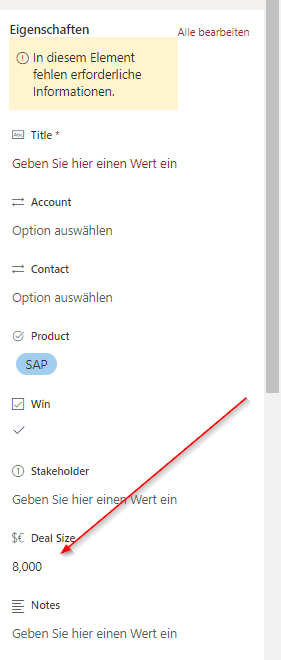
    Get-PnPListItem -List "Opportunities" -Query "<View><Query><Where><Eq><FieldRef Name='DealSize'/><Value Type='Currency'>40000</Value></Eq></Where></Query></View>"

    Example for DateTime

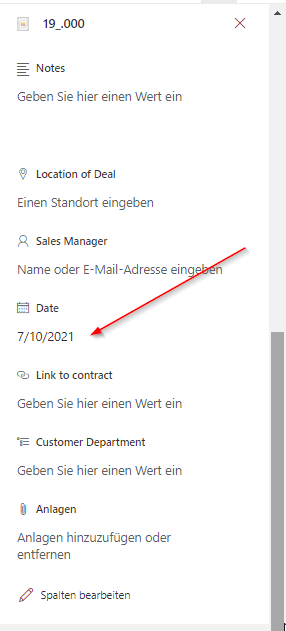
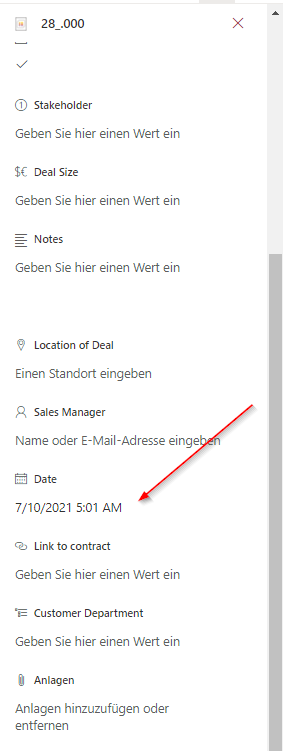
    You have to format date times according to this format (ISO8601).

    yyyy-MM-ddTHH:mm:ssZ

    You can do this by appending -Format s, when creating the variable

    $CreationDate = Get-Date "16.06.2021 20:04" -Format s

    If DateTime should exactly match a specific date

    $CreationDate = Get-Date "16.06.2021 20:04" -Format s
    Get-PnPListItem -List "Opportunities" -Query "<View><Query><Where><Eq><FieldRef Name='Created'/><Value Type='DateTime' IncludeTimeValue='FALSE'>$CreationDate</Value></Eq></Where></Query></View>"

    If DateTime should be after a specific date

    Example: I want to find all items, created after 15.06.2021.

    $CreationDate = Get-Date "15.06.2021" -Format s
    Get-PnPListItem -List "Opportunities" -Query "<View><Query><Where><Gt><FieldRef Name='Created'/><Value Type='DateTime' IncludeTimeValue='FALSE'>$CreationDate</Value></Gt></Where></Query></View>"

    If DateTime should be before a specific date

    Example: I want to find all items, created before 15.06.2021.

    Get-PnPListItem -List "Opportunities" -Query "<View><Query><Where><Lt><FieldRef Name='Created'/><Value Type='DateTime' IncludeTimeValue='FALSE'>$CreationDate</Value></Lt></Where></Query></View>"

    Example for GUID

    [GUID]$UniqueID= "b4ae9e9f-7103-459a-acb2-73573d035b36"
    Get-PnPListItem -List "Opportunities" -Query "<View><Query><Where><Eq><FieldRef Name='UniqueId'/><Value Type='GUID'>$UniqueID</Value></Eq></Where></Query></View>"

    Example for integer

    In this case I want to find all opportunites with 2 stakeholders.

    Get-PnPListItem -List "Opportunities" -Query "<View><Query><Where><Eq><FieldRef Name='Stakeholder'/><Value Type='Integer'>2</Value></Eq></Where></Query></View>"

    Example for lookup

    Get-PnPListItem -List "Opportunities" -Query "<Query><Where><Eq><FieldRef Name='Contact'/><Value Type='Lookup'>Sus Spicious</Value></Eq></Where></Query>"

    Example for Note aka multi line text

    Get-PnPListItem -List "Opportunities" -Query "<Query><Where><Eq><FieldRef Name='Notes'/><Value Type='Note'>He was really curious.</Value></Eq></Where></Query>"

    Example for text aka string

    In this Query, I am looking for items, where the title equals Opp 3.

    Get-PnPListItem -List "Opportunities" -Query "<Query><Where><Eq><FieldRef Name='Title'/><Value Type='Text'>Opp 3</Value></Eq></Where></Query>"

    Example for user

    In this query, I am looking for items, where the authors UPN is Serkar@devmodernworkplace.onmicrosoft.com.

    Get-PnPListItem -List "Opportunities" -Query "<Query><Where><Eq><FieldRef Name='Author' /><Value Type='User'>Serkar@devmodernworkplace.onmicrosoft.com</Value></Eq></Where></Query>"

    Example for OR

    In this query, I am looking for items, where the value for Stakeholder is 1 or the value Win is yes.

    Get-PnPListItem -List $ListName -Query "<View><Query><Where><Or><Eq><FieldRef Name='Stakeholder'/><Value Type='Integer'>1</Value></Eq><Eq><FieldRef Name='Win'/><Value Type='Boolean'>1</Value></Eq></Or></Where></Query></View>"

    Example for AND

    In this query, I am looking for items, where the value for Stakeholder is 1 and the value Win is yes.

    Get-PnPListItem -List $ListName -Query "<View><Query><Where><And><Eq><FieldRef Name='Stakeholder'/><Value Type='Integer'>1</Value></Eq><Eq><FieldRef Name='Win'/><Value Type='Boolean'>1</Value></Eq></And></Where></Query></View>"

    Complete example

    $Url = "https://devmodernworkplace.sharepoint.com/sites/Sales" 
    $ListName = "Opportunities"
    
    Connect-PnPOnline -Url $Url -Interactive
    
    $AmountOfStakeholders = 2
    $ColumName = "Stakeholder"
    
    Get-PnPListItem -List $ListName -Query "<View><Query><Where><Eq><FieldRef Name='$ColumName'/><Value Type='Integer'>$AmountOfStakeholders</Value></Eq></Where></Query></View>"

    Troubleshooting

    I am getting to many items

    Error

    You get nearly every item in the list, but you are filtering for specific SharePoint items

    Cause

    Maybe you forgot the <View> part?

    Resolution

    Without view:

    With view:

    Get-PnPListItem -List "Opportunities" -Query "<View><Query><Where><Eq><FieldRef Name='Stakeholder'/><Value Type='Integer'>2</Value></Eq></Where></Query></View>"

    Exception from HRESULT: 0x80131904

    Error message:

    Get-PnPListItem : Exception from HRESULT: 0x80131904
    In Zeile:1 Zeichen:1
    + Get-PnPListItem -List "Opportunities" -Query "<View><Query><Where><gt ...
    + ~~~~~~~~~~~~~~~~~~~~~~~~~~~~~~~~~~~~~~~~~~~~~~~~~~~~~~~~~~~~~~~~~~~~~
        + CategoryInfo          : WriteError: (:) [Get-PnPListItem], ServerException
        + FullyQualifiedErrorId : EXCEPTION,PnP.PowerShell.Commands.Lists.GetListItem

    Cause:

    You did not care about the case sensitivity of the logical operands

    Resolution:

    Wrong:

    Get-PnPListItem -List "Opportunities" -Query "<View><Query><Where><gt><FieldRef Name='Created'/><Value Type='DateTime' IncludeTimeValue='FALSE'>$CreationDate</Value></gt></Where></Query></View>"

    Right:

    Get-PnPListItem -List "Opportunities" -Query "<View><Query><Where><Gt><FieldRef Name='Created'/><Value Type='DateTime' IncludeTimeValue='FALSE'>$CreationDate</Value></Gt></Where></Query></View>"

    Field types are not installed properly

    Error message in german

    Get-PnPListItem : Mindestens ein Feld ist nicht richtig installiert. Wechseln Sie zur Listeneinstellungsseite, um diese Felder zu löschen.
    In Zeile:1 Zeichen:1
    + Get-PnPListItem -List "Opportunities" -Query "<View><Query><Where><Gt ...
    + ~~~~~~~~~~~~~~~~~~~~~~~~~~~~~~~~~~~~~~~~~~~~~~~~~~~~~~~~~~~~~~~~~~~~~
        + CategoryInfo          : WriteError: (:) [Get-PnPListItem], ServerException
        + FullyQualifiedErrorId : EXCEPTION,PnP.PowerShell.Commands.Lists.GetListItem

    Error message in english

    Get-PnPListItem : One or more field types are not installed properly. Go to the list settings page to delete these fields.
    In Zeile:1 Zeichen:1
    + Get-PnPListItem -List "Opportunities" -Query "<View><Query><Where><Gt ...
    + ~~~~~~~~~~~~~~~~~~~~~~~~~~~~~~~~~~~~~~~~~~~~~~~~~~~~~~~~~~~~~~~~~~~~~
        + CategoryInfo          : WriteError: (:) [Get-PnPListItem], ServerException
        + FullyQualifiedErrorId : EXCEPTION,PnP.PowerShell.Commands.Lists.GetListItem

    Cause

    You did not care of the case sensitivity of the column name

    Resolution

    Wrong:

    Get-PnPListItem -List "Opportunities" -Query "<View><Query><Where><Gt><FieldRef Name='created'/><Value Type='DateTime' IncludeTimeValue='FALSE'>$CreationDate</Value></Gt></Where></Query></View>"

    Right:

    Get-PnPListItem -List "Opportunities" -Query "<View><Query><Where><Gt><FieldRef Name='Created'/><Value Type='DateTime' IncludeTimeValue='FALSE'>$CreationDate</Value></Gt></Where></Query></View>"

    Bild von Deedee86 auf Pixabay

  • Determine internal name of SharePoint Columns with GUI

    Determine internal name of SharePoint Columns with GUI

    You have to determine the internal name of SharePoint columns, when you want to get the values of the items programatically or develop some apps with PowerApps. If you make use of display names of columns, you might not get the values of the columns, that’s why you should use the internal name of the columns, In this article I will show you how to do it by a step-by-step description.

    Description

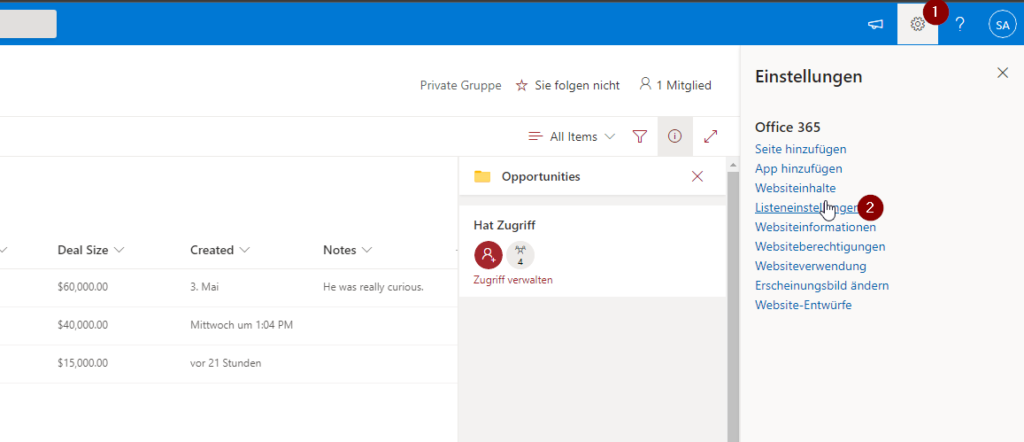
    Browse to the list, where you want to get field internal name and open the list settings.

    List settings to see internal name of SharePoint Columns

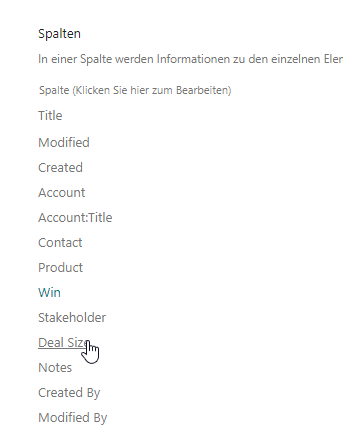
    Scroll down to the SharePoint columns and click on the column, which you want to get the internal name of. In my example I want to check it for the SharePoint Column Deal Size.

    Example of an SharePoint Column in library settings

    After clicking on Deal Size, I am checking the URL in the adress bar. The part after Field= is the internal name for the column. In my case it is DealSize.

    Internal name of an SharePoint Column

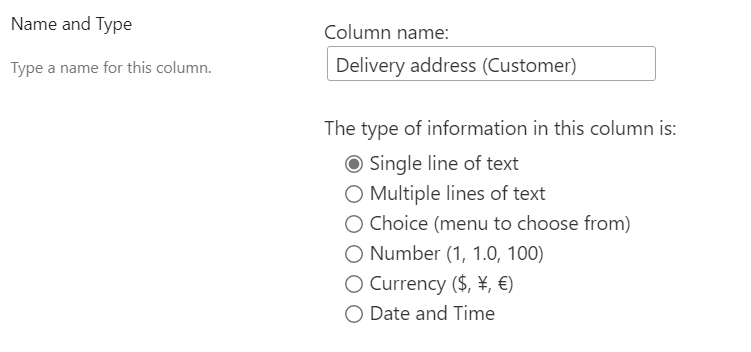
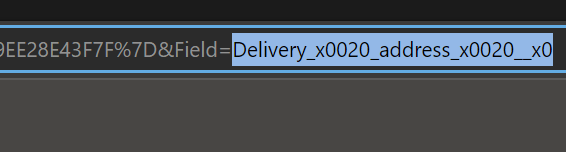
    If you use special characters, you will notice, that it won’t be that easy to determine the internal name of the SharePoint columns. Let me show it to you for the column Delivery address (Customer). As you can see, it got _x0020 and some other placeholder, which are not guessable easily.

    SharePoint Column Delivery address (Customer)
    Internal Name of Delivery adress (Customer)

    You might find intersting

    If you want to create a column, consider the official article of microsoft: Create a column in a list or library – SharePoint (microsoft.com)

    You can deterimine the internal name of a SharePoint Column programatically like this: Getting FieldValues of Items – SPO Scripts

  • Getting Fieldvalues of Items

    Getting Fieldvalues of Items

    Getting all values of all items

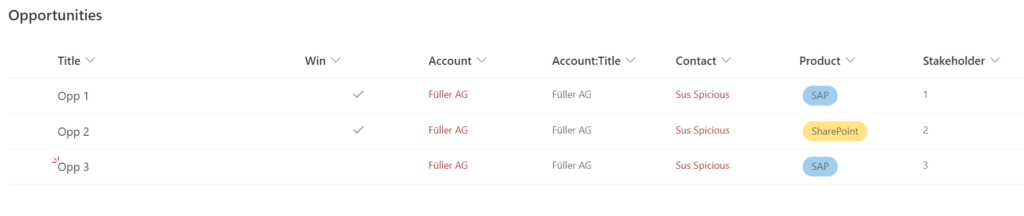
    If you want to retrieve all fieldvalues of an item, you can use following steps. I am getting the opportunities of the sales department

    Screenshot of SharePoint List with values of items
    • Connect to SharePoint Online with PNP. If you don’t know how to, check the post. I am connecting with the sales site

      Connect-PnPOnline -Url "https://devmodernworkplace.sharepoint.com/sites/Sales" -Interactive
    • After connecting, get the list.

      $Items =Get-PnPListItem -List "YourList"

      I am using the list opportunities:

      $Items =Get-PnPListItem -List "Opportunities"

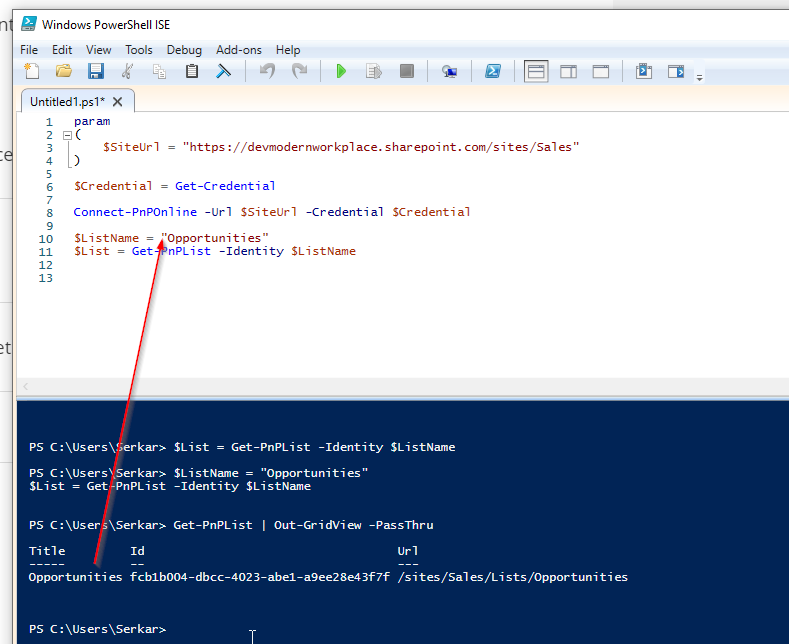
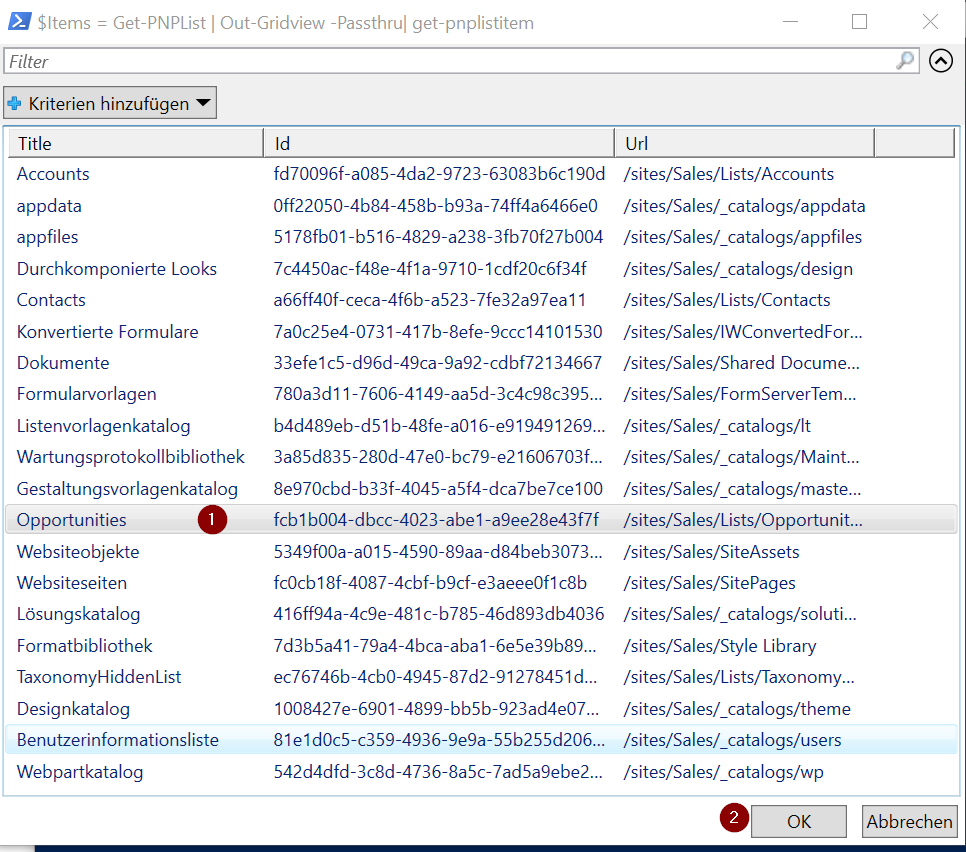
      If you don’t know what the internal name of your list is, you can make use of the cmdlet

      $Items = Get-PNPListItem | Out-Gridview -Passthru
    out grid view with lists

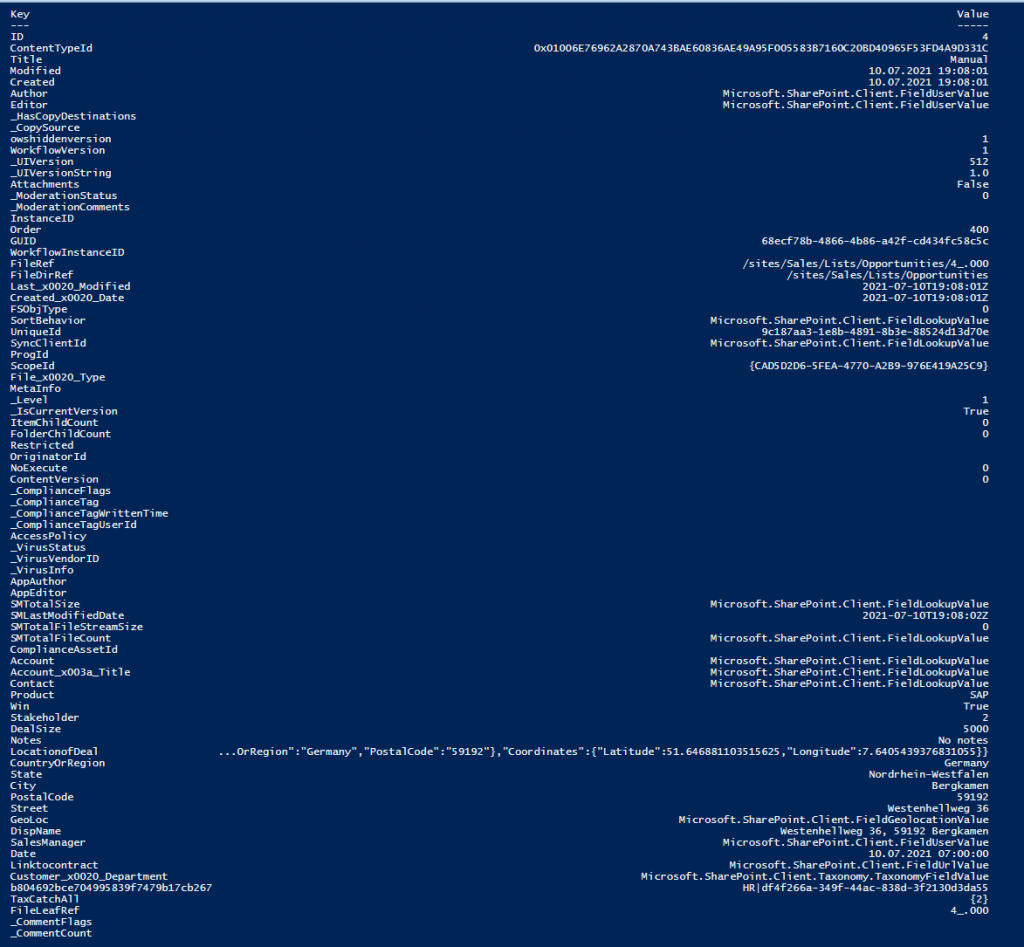
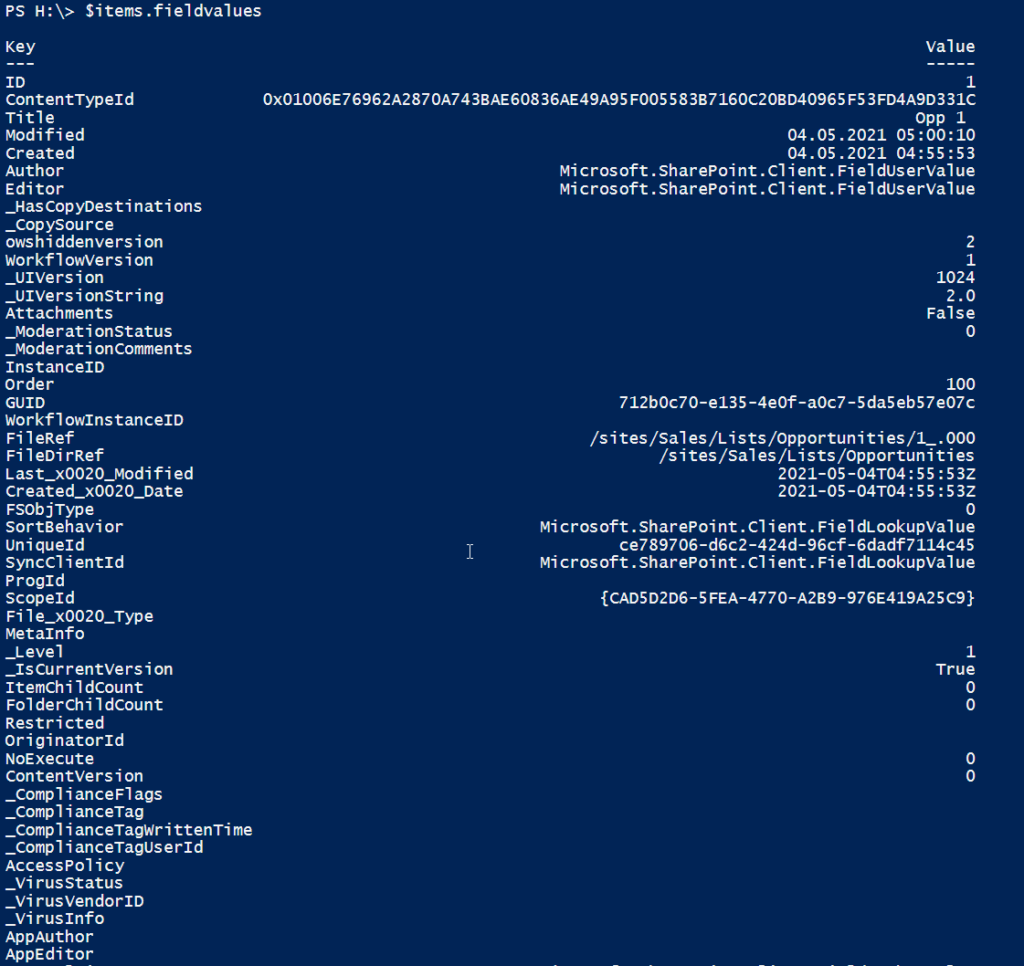
    After getting the items, you can get all fieldvalues like this:
    $Items.Fieldvalues

    Screenshot of all values of items

    Filter items by specific value

    You can filter items like this. You have to use the key, which you get with $Items. FieldValues

    Filter by Where Object

    $Item = $Items | Where-Object {$_.Fieldvalues["KEY"] -eq "VALUE"}

    I filter for items with the title Opp 2

    $Item = $Items | Where-Object {$_.Fieldvalues["Title"] -eq "Opp 2"}

    Filter by -Query Parameter

    I have created a separate post for this. Check it out.

    Getting only specific amount of Items

    It might happen, that your list contains many items. In order to get only 1000 Items, make use of the parameter -PageSize

    Get-PnPListItem -List "Opportunities" -PageSize 1000

    Getting a specific value for specific item

    First get one single item, either by filtering, or by using the index

    You can use indexing with following method

    $Item= $Items[INDEX]

    For the first Item: $Item = $Items[0]

    For the second Item: $Item = $Items[1] etc,

    If you got a single item, you can get the fieldvalues like this:

    $item.FieldValues.KEY

    In my case I use the key “Product”

    $item.FieldValues.Product

    screenshot of specific value

    Or “Contact”

    screenshot of specific contact value

    Example script to get all fieldvalues for all items

    $Url = "https://devmodernworkplace.sharepoint.com/sites/Sales" 
    $ListName = "Opportunities"
    
    Connect-PnPOnline -Url $Url -Interactive
    $Items = Get-PnPListItem -List $ListName
    
    $Items.Fieldvalues

    Example script to get all fieldvalues for a specific item

    $Url = "https://devmodernworkplace.sharepoint.com/sites/Sales" 
    $ListName = "Opportunities"
    
    Connect-PnPOnline -Url $Url -Interactive
    $Items = Get-PnPListItem -List $ListName
    
    $Item =  $Items | Where-Object {$_.Fieldvalues["Title"] -eq "Opp 2"}
    
    $item.FieldValues